
Measuring Congresses When the Results Are Uncomfortable
About the webinar
In this on-demand episode, Mark Watson (Fractal Force) and Pierre Metrailler (Onomi) unpack a difficult reality about congress ROI: it often breaks down not because teams lack effort, but because they measure the wrong things.
Here is a recap of what we covered, including the key moments, the practical example, and the operating model you can apply.
A core theme was that most congress reporting optimizes for what is easiest to count, not what is easiest to convert into impact.
Mark called this the “firework paradox.” Dashboards light up with impressive activity numbers, but once the congress ends, it is still unclear what actually changed.
Pierre connected this to what he sees in the field: congresses create real intent, but the evidence is often trapped in disconnected systems, late follow-up, and reporting that does not reflect the funnel.
We opened with a simple poll:
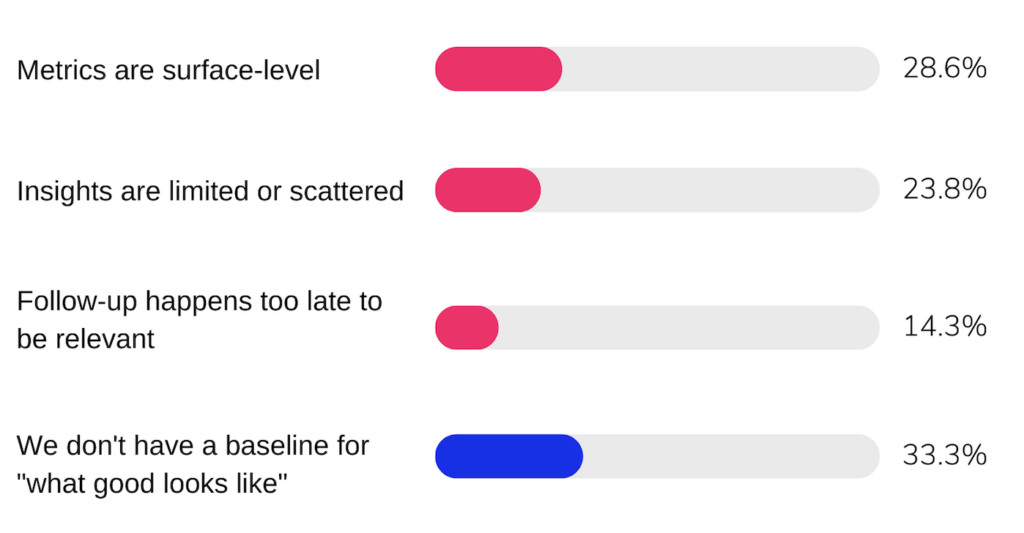
The strongest signal was clear: many teams still do not have a baseline for what good looks like , and insights are often limited or scattered. That set the tone for the session: the gap is not data volume. It is measurement design.
Mark : Because there is a disconnect between correlation and causation. Vanity metrics like attendance, scans, and reach look positive, so organizations assume success without proving what worked, what did not, and what changed.
Mark : Real ROI sits in the middle of the funnel. It is not only about reach or sales outcomes. It is about whether the congress moved education, attitudes, confidence, and behavior. If those changes are not measured, teams stay blind to what actually drove value.
Pierre : Show the funnel, not just the headline. Start by satisfying the need for activity metrics, then move quickly to the smaller, more meaningful indicators that translate into follow-up and insight. Smaller numbers are not failure. They are where the signal is.
Mark: Three operating rules:
- The 30-second rule. If booth staff cannot categorize an interaction in 30 seconds, it will not scale.
- A to B change definition. Measure what the HCP believed or knew before versus after, and where progression broke down.
- Immediate CRM connection. Follow-up must be linked to specific context and synced fast, or the value decays.
Pierre walked through a daily report card model used with congress teams, built to shift reporting from vanity metrics to action.
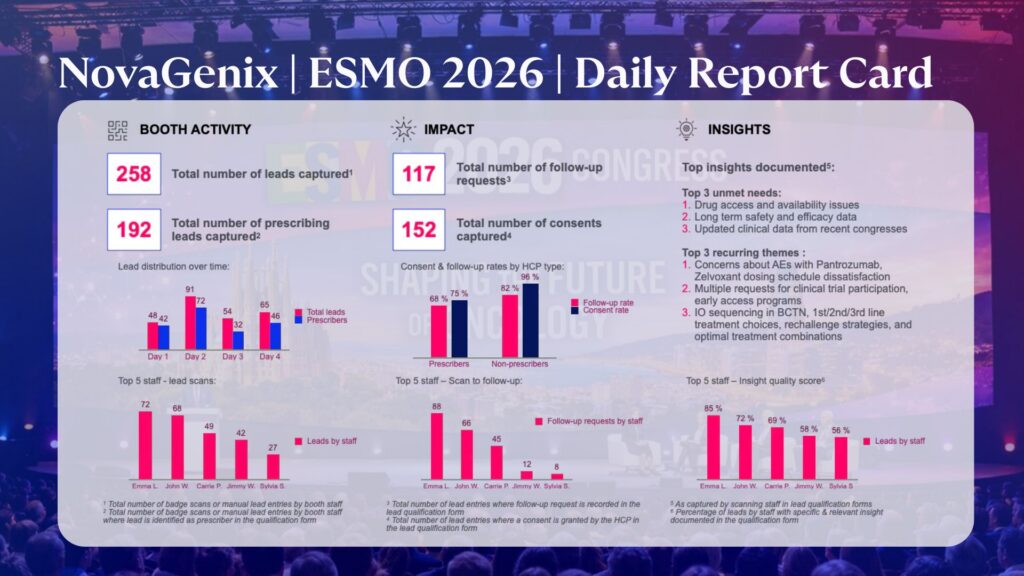
The report card is built around three buckets:
- Activity: what happened (scans, conversations, engagement volume)
- Impact: what moved (follow-up requests, consent, next steps created)
- Insights: what was learned (themes, unmet needs, questions that signal intent)
The reason this matters is timing. Performance becomes visible while the congress is still live, not in a debrief weeks later. That changes what teams can do with the data.
Pierre also shared how this reframes success in practical terms: teams stop saying “we had 9,000 people on the booth,” and start saying “we have 300 engaged HCPs we need to follow up with.”
Mark summarized a practical model for cracking the congress black box:
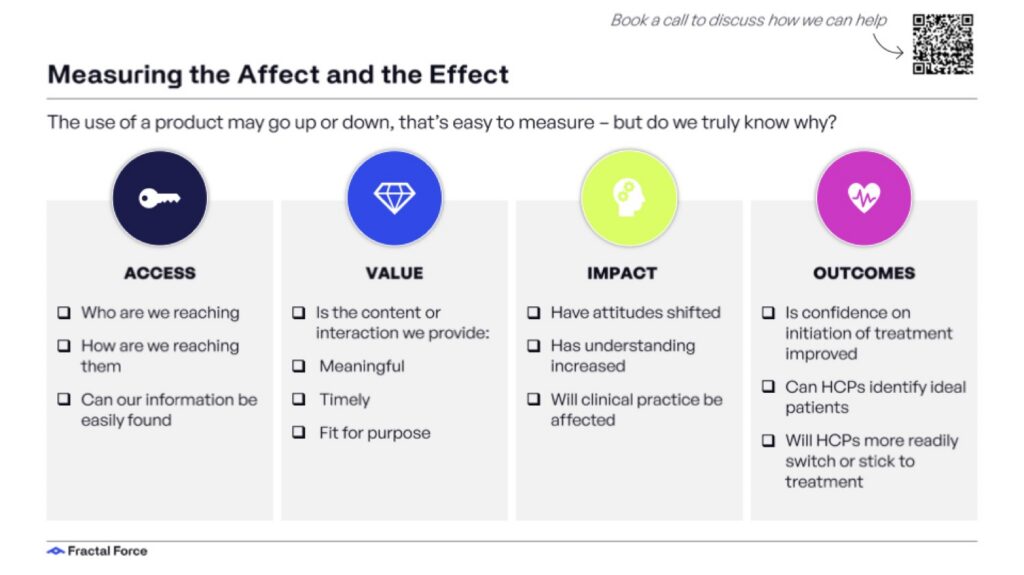
- Access Not just reach, but whether information is actually easy to find, timely, and usable after the congress.
- Value Whether the interaction delivered something meaningful to the HCP, and whether follow-up was requested and delivered.
- Impact Whether beliefs, understanding, confidence, or intent shifted. This is the sticky middle most dashboards ignore.
- Outcomes Not only market performance, but evidence of behavior change that connects back to patient care and treatment decisions.
Congress reporting does not fail because teams lack numbers, it fails because the numbers do not explain what changed.
ROI improves when reporting follows the funnel, focuses on the middle, and turns congress engagement into CRM-ready context that enables fast, relevant follow-up.
Speakers
- Mark Watson — Co-Founder, Fractal Force
- Pierre Metrailler — CEO, Onomi